Behind the Scenes: How Vietnamese Entertainment Content Gets Produced


A familiar song, a quick-witted host, or a lively competition can make a Vietnamese entertainment program feel effortless. Behind that moment is a coordinated production journey: a creative idea is shaped for its audience, prepared by a team, filmed or broadcast, then delivered through Vietnamese television channels and digital platforms.
Each program has its own approach, but most move through the same broad stages. Understanding those steps offers a clearer view of how television production balances storytelling, cultural context, technical planning, and the changing ways viewers watch.
From concept to format
A Vietnamese entertainment program begins with an idea that producers develop into a format for a particular audience and viewing setting. The format defines what happens in each episode, who takes part, and how the program holds viewers’ attention.
Creative teams may start with a theme, a performance style, a competition, or a conversation they believe will interest viewers. They then test the idea against practical questions: Can it sustain a full episode? Does it suit a studio, an outdoor location, or a live stage? What should viewers expect from one episode to the next?
Audience preferences and cultural context influence these decisions. A format might draw on music, comedy, family participation, food, or regional traditions, but the treatment needs to feel natural rather than added for decoration. Language, humor, guest choices, and the balance between familiar and new elements can all affect how a program connects with Vietnamese audiences.
Producers also consider where people will watch. A long studio conversation may suit a scheduled television slot, while a performance with clear visual highlights could travel well as a full episode and as shorter online clips. Planning for both does not guarantee success, but it can help the concept work across different viewing habits.
The people behind the production
Vietnamese television production depends on a team whose members handle creative decisions, on-camera work, and the practical details of making each episode. Producers coordinate the work, while writers, directors, hosts, performers, and crew bring the format to life.
The producer guides the program from idea through delivery. Depending on the production, producers may oversee budgets and schedules, select contributors, coordinate departments, and make decisions when plans change. Writers and researchers develop scripts, questions, segments, and background material. A director shapes the on-screen action and works with camera and sound teams to capture it.
Hosts give the program its voice and help viewers follow what is happening. Performers, contestants, musicians, guests, and other contributors provide the moments around which each episode is built. Their preparation varies: a host may work from a detailed script, while an unscripted guest may receive only a briefing on the segment and its timing.
Behind the camera, production managers, camera operators, lighting and audio technicians, stage managers, set designers, makeup artists, and floor crew keep the work moving. A smooth show depends on these roles fitting together. Strong performers cannot compensate for unclear cues or poor sound, and technical polish alone cannot replace a compelling idea.
Preparing for the cameras
Pre-production turns the format into a workable plan for filming or broadcasting. Teams develop scripts, cast hosts and contributors, book locations, schedule rehearsals, and check the equipment and logistics before the cameras roll.
The level of detail depends on the program. A scripted comedy may need carefully timed scenes and dialogue, while a talk or variety show may use a running order with room for spontaneous exchanges. In both cases, the team needs to know the episode’s sequence, transitions, likely timings, and any essential information for the audience.
Casting and contributor preparation also shape the final result. Producers look for people who suit the format, then explain the setting, expectations, and practical arrangements. For a competition, that could mean clarifying how rounds work. For a performance, it may involve confirming music, staging, and technical requirements.
- Script and running order: Map segments, introductions, transitions, and approximate timings.
- Rehearsals: Practise cues, movement, handoffs, and any complex performances.
- Location and set planning: Confirm access, audience seating, layout, lighting, and safety needs.
- Technical checks: Test cameras, microphones, playback, lighting, communications, and backup plans.
Rehearsals are especially valuable for live broadcasting, where a missed cue can affect everything that follows. They also help recorded productions identify problems before a full take. Still, rehearsal cannot predict every unexpected moment; teams need enough flexibility to respond without losing the program’s shape.
Filming live and recorded programs
Live broadcasting happens in real time, while recorded programs are captured first and can be reviewed before release. Live production rewards precise coordination and quick decisions; recorded production allows more opportunities to repeat, select, and refine material.
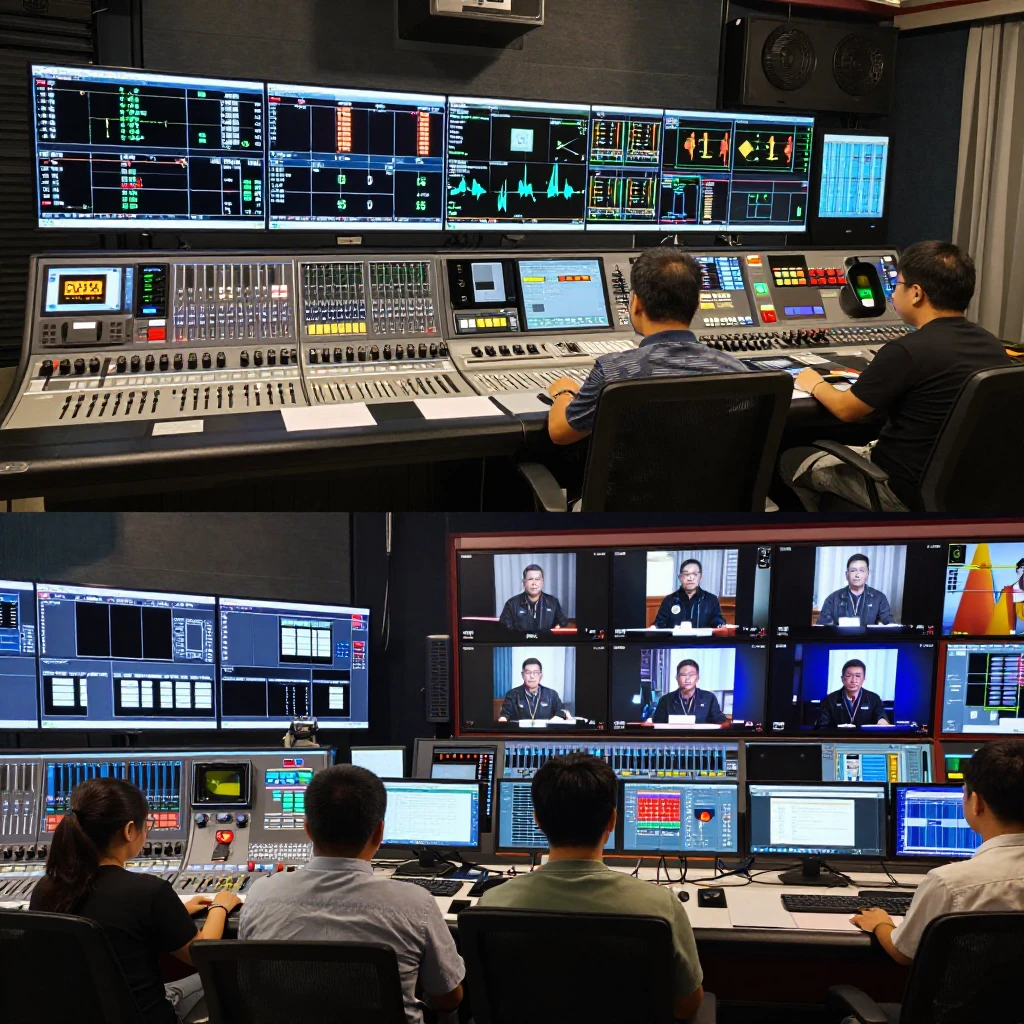
During a live show, the director calls camera shots and cues from the control room, while the floor crew guides hosts and performers in the studio. Audio, lighting, graphics, playback, and timing have to work together. If a segment runs long, the team may need to adjust later parts of the running order while keeping the broadcast coherent.
That immediacy creates energy for viewers, but it limits the chance to correct mistakes. Producers prepare contingency plans for technical issues and unexpected changes, though no plan removes every risk. Live television works best when the format, rehearsal, and crew communication support quick, clear decisions.
Recorded shows offer a different kind of control. A scene or performance can be captured more than once, and producers can select the strongest material during post-production. This can improve pacing and sound, but extra takes and editing add time and may make a spontaneous moment feel less immediate. Some programs combine both approaches, recording in front of an audience and editing the result before broadcast.
Editing, approval, and final delivery
Post-production turns recorded footage into a finished episode, then prepares it for review and broadcast. Editors shape the material, sound and graphics teams polish it, and the production organization checks that the final version is ready for its intended outlet.
Editors work from the recorded footage to build a clear sequence, maintain pace, and remove material that does not serve the program. They may add titles, captions, transitions, or visual effects, depending on the format. Audio teams balance speech, music, and ambient sound so viewers can follow what is happening on television or on a mobile device.
Before release, the finished program may go through editorial and technical review. The purpose is to check that the episode matches the approved format, plays correctly, and meets the broadcaster’s requirements. Exact review procedures differ by organization and program, so there is no single workflow that applies to every Vietnamese television production.
The final version needs to be delivered in the right format and on schedule. Teams prepare assets such as the episode file, captions, graphics, and promotional extracts where required. Recorded content allows more revision than a live show, but late changes can still put delivery deadlines under pressure. A clear handoff between production, post-production, and broadcast teams helps prevent avoidable delays.
Reaching viewers through television and streaming
Vietnamese entertainment reaches viewers through scheduled television broadcasts and digital services, including live TV streaming apps. Streaming can make a channel easier to watch on connected devices, though the experience depends on the platform, internet connection, and content rights.
For viewers, the route to a program may begin with a channel schedule or a streaming app’s live-TV guide. A compatible phone, tablet, computer, or connected television can offer another way to follow a broadcast. Depending on the service, viewers may also find catch-up episodes or on-demand content, but availability varies by app and licensing arrangements.
Distribution affects production choices, too. A program intended for both television and streaming needs to remain clear on a large screen and on smaller devices. Readable graphics, clean dialogue, and strong segment openings help across settings. Teams may also prepare short clips to introduce a show online, although clips serve a different purpose from a full episode.
Streaming access does not automatically improve a program or guarantee that every viewer can watch it. Device compatibility, data costs, connection quality, and regional availability can all matter. For audiences, the practical step is to check whether the chosen app carries the relevant Vietnamese television channel and what playback options it offers.
FAQ
These answers summarize the main stages, roles, and viewing options involved in Vietnamese entertainment production.
What are the main stages of producing an entertainment program?
Most programs move through concept development, pre-production, filming or live broadcasting, post-production where applicable, review, and delivery to television or digital platforms. The order and amount of work vary by format.
Who is involved in a Vietnamese TV production?
A production may involve producers, writers, researchers, directors, hosts, performers, production managers, camera and audio operators, lighting technicians, set designers, editors, and other crew members. The team size depends on the show.
How does live production differ from recorded production?
Live production is broadcast as events unfold, so the team must coordinate cues and respond immediately. Recorded production allows teams to review footage, choose takes, and edit the episode before it reaches viewers.
How can viewers watch Vietnamese entertainment online?
Viewers can use a live TV streaming app or another authorized digital service that carries the relevant Vietnamese television channel. Check the app’s channel list, device support, and whether it offers live viewing, catch-up, or on-demand programs.